School Bus Safety Training
A Smarter, Safer Approach to Student Transportation

Why School Bus Safety Training Matters
Every school day, over 25 million students board buses with one expectation: to arrive safely.
While school buses are statistically the safest method of student transportation, most accidents happen during routine, preventable situations. For example, backing into a fixed object, not seeing a pedestrian, or getting sideswiped while changing lanes.
These aren’t freak accidents. They’re the result of recurring challenges every transportation department faces.
That’s why having a structured, up-to-date school bus safety training program is not just smart, it’s essential.
Common Transportation Risks Districts Face
When we talk to school districts across the country, we hear the same safety pain points repeatedly:
- Drivers distracted by phones or unruly students
- Poor visibility in early morning or evening routes
- Confusion about student pick-up and drop-off procedures
- Tail swing and sideswipe collisions on narrow roads
- Driver fatigue during long shifts or after-hours activities
- Missed pre-trip inspections that lead to mechanical failures
The good news? Every one of these issues is preventable with the right school bus safety training, delivered consistently and in a format drivers can use.
School Bus Safety Training Topics We Cover
INFINITI Fleet Safety Training offers over 850 microlearning videos, with an extensive catalog designed specifically for student transportation teams.
Below is a snapshot of key school bus safety training topics, each tied to real-life risk scenarios your drivers face every day.
1. Bus Stop Safety
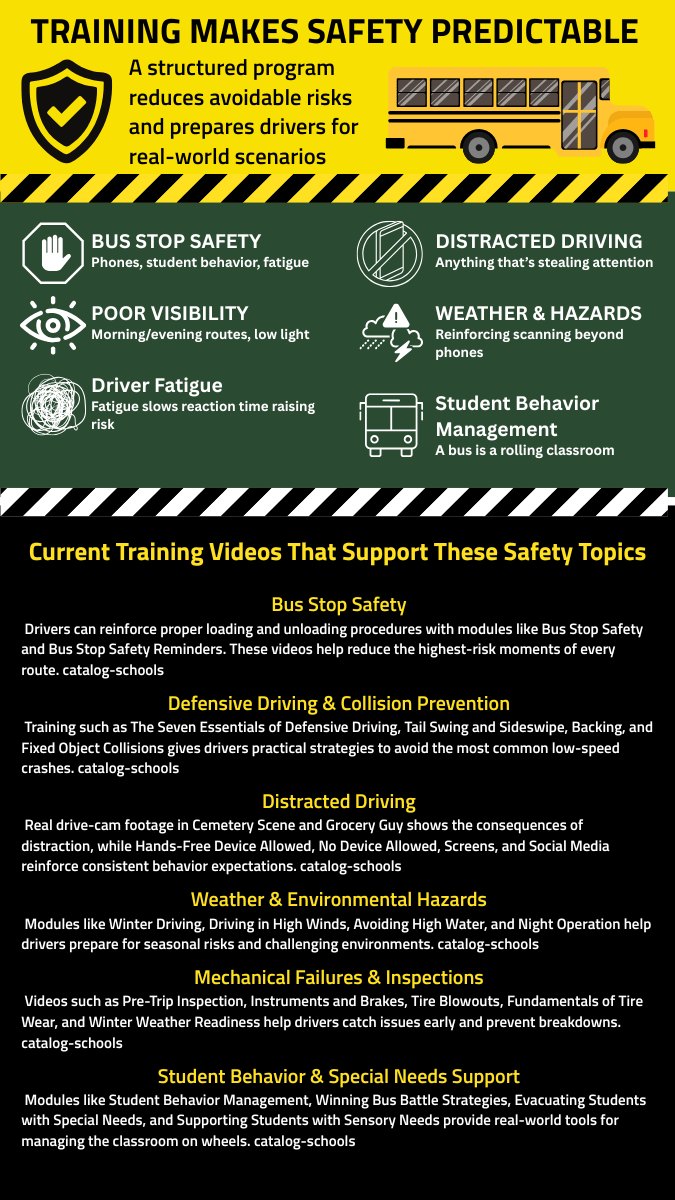
Bus stop procedures aren’t just routine. They’re one of the highest-risk parts of any school bus route. In fact, most student transportation-related injuries and fatalities occur outside the bus, during loading and unloading.
Drivers must manage visibility, monitor traffic, anticipate student behavior, and enforce stop-arm protocol in a matter of seconds.
What you can do:
- Review bus stop safety protocols annually.
- Audit your highest risk stops for visibility or traffic issues.
- Create a checklist for new drivers.
- Use modules like School Bus – Bus Stop Safety as part of ongoing school bus safety training.
A reminder at the right time can save a life.
2. Defensive Driving and Collision Prevention
Most school bus collisions are low-speed, low-profile, and 100 percent preventable. Tail swings, sideswipes, backing accidents, and fixed object collisions account for many insurance claims and equipment downtime each year.
How to reduce low-speed collisions:
- Emphasize mirror usage and frequent scanning.
- Require quarterly refreshers like Tail Swing and Sideswipe and Speed and Space Management.
- Use real district incidents as teaching moments.
- Encourage reporting of near misses without penalty.
Our school bus safety training videos make these lessons stick with real examples, not just theory.
3. Distracted Driving
Distraction isn’t just texting. It’s student behavior, fatigue, radios, GPS devices, and even daydreaming. A single lapse can have serious consequences.
What leaders can do:
- Redefine distraction with your team beyond phones.
- Include fatigue in safety talks.
- Revisit modules like Distracted Driving – Cemetery Scene and Grocery Guy.
One district that implemented these videos into monthly meetings reported a 40 percent reduction in distraction-related incidents in 12 months.
4. Weather and Environmental Hazards
Rain, ice, fog, and darkness affect everything from visibility to stopping distance. Many drivers rely on instinct instead of strategy, which is dangerous in today’s unpredictable weather.
How to prepare drivers:
- Require cold-weather and night-driving modules before winter.
- Share seasonal reminders with quick video refreshers.
- Post weather-readiness checklists in transportation offices.
Use modules like Winter Weather Readiness, High Winds, and Night Driving.
5. Mechanical Failures and Inspections
Mechanical failures don’t always start in the shop. They often come from missed pre-trip checks or ignored warning lights.
How to build a strong inspection culture:
- Make inspections part of regular safety meetings.
- Empower drivers to report concerns without fear.
- Share stories of small issues that became big breakdowns.
Reinforce awareness with modules like Pre-Trip Inspection, Tire Blowouts, and Axle Alignment and Maintenance.
6. Student Behavior and Classroom Management on Wheels
Managing 40 students while driving requires skill, patience, and training. Behavior issues can escalate quickly into safety risks if drivers feel overwhelmed.
How to support drivers:
- Provide real de-escalation techniques, not just write-ups.
- Involve parents and administrators in expectations.
- Use Winning Bus Battle Strategies modules for proven methods.
Student behavior challenges are rising nationwide. School bus safety training equips your team to handle them with confidence.
School Bus Safety Training That Supports Your Team
Your team already works hard. Training shouldn’t feel like another burden. It should feel like a tool that makes their job safer, easier, and more supported. That’s exactly what INFINITI provides.
Why Districts Choose INFINITI
- Track completion and compliance
- Microlearning format
- Mobile-friendly access
- Customizable for your policies
- Audit-ready records
- Lower liability and insurance costs
“The system is easy to use, and our drivers complete the training. It’s made a huge difference in how prepared they are on the road.”
— Transportation Director, Midwestern School District

Bring Smarter Safety to Your District
With INFINITI, training becomes a strategic advantage, not a burden.
- Consistency: Automated scheduling ensures that all drivers receive the same training, maintaining uniformity across the organization.
- Efficiency: Automation reduces the administrative burden on safety managers, freeing up time for other critical tasks.
- Compliance: Regular training helps in meeting regulatory requirements, reducing the risk of non-compliance penalties.
- Risk Reduction: An informed driver is less likely to be involved in accidents, leading to a safer fleet and potentially lower insurance costs.
Automating safety training with INFINITI’s online LMS is a strategic move for transportation companies aiming to enhance safety, ensure compliance, and streamline operations. By leveraging INFINITI’s comprehensive features, companies can efficiently set up and maintain an effective safety training program that keeps drivers informed and promotes a culture of safety.
FAQs
What is School Bus Safety Training and why is it important?
School Bus Safety Training is a structured approach to helping school transportation teams prevent accidents, reduce risk, and improve decision making on the road. It covers essential topics such as bus stop procedures, defensive driving, distracted driving, weather hazards, inspections, and student behavior management. School Bus Safety Training is important because most incidents are preventable when drivers have consistent instruction and reminders. With the right program, districts can strengthen safety culture, reduce liability, and ensure every student is transported with care and confidence throughout the school year.
How often should drivers complete School Bus Safety Training?
Drivers should participate in School Bus Safety Training regularly throughout the year to keep critical skills fresh. Many districts benefit from monthly or quarterly microlearning sessions that focus on high risk topics like bus stop safety, distracted driving, and inspections. Ongoing training prevents complacency and helps drivers stay alert to seasonal hazards and changes in student behavior. A consistent training schedule also supports compliance, reduces incident rates, and ensures supervisors and administrators can document participation for audits and internal evaluations. Routine training builds long term safety habits.
What topics should be included in a School Bus Safety Training program?
A strong School Bus Safety Training program should include bus stop safety, defensive driving, distracted driving, student behavior management, mechanical awareness, pre trip inspections, visibility challenges, and weather related hazards. These topics cover the most common preventable incidents transportation teams encounter. Training should also address real world risks such as tail swing collisions, fatigue, and nighttime operation. A complete program helps drivers prepare for daily challenges and reinforces a proactive approach to student safety. Including multiple topics strengthens overall awareness and provides practical tools for safer operations.
How does School Bus Safety Training help prevent bus stop accidents?
School Bus Safety Training teaches drivers how to manage high risk loading and unloading areas, improve visibility, and anticipate student behavior. Since most severe student injuries occur outside the bus, training focused on stop arm procedures, traffic awareness, and environmental hazards is essential. Drivers learn to evaluate each stop carefully, identify blind spots, and use proper communication with students. This improves consistency across routes and reduces the chances of preventable accidents. Supervisors can also use this training to reinforce district expectations and keep all drivers aligned on safety protocols.
How can School Bus Safety Training reduce distracted driving incidents?
School Bus Safety Training helps drivers understand how distractions occur and how to maintain focus despite noise, radios, technology, or student behavior. Real scenario videos and microlearning modules show the consequences of distraction and offer practical strategies for staying alert. Drivers are given tools to manage internal and external distractions while maintaining a safe environment. When training is consistent, supervisors report fewer near misses and more confident responses to challenging situations. Reducing distraction begins with awareness, and training provides the foundation drivers need to remain attentive and responsible.
What role does defensive driving play in School Bus Safety Training?
Defensive driving is a core part of School Bus Safety Training because most collisions are low speed, preventable, and caused by limited awareness. Drivers learn to use mirrors effectively, scan continuously, manage space, and anticipate hazards before they develop. Training gives examples of tail swing issues, sideswipes, and fixed object collisions to highlight common mistakes. By developing strong defensive habits, drivers reduce incidents and protect students from avoidable harm. This type of training builds confidence and encourages a mindset that prioritizes caution, patience, and readiness during every route.
How does weather impact School Bus Safety Training requirements?
Weather conditions like rain, fog, ice, and darkness create challenges for visibility and stopping distance. School Bus Safety Training teaches drivers to adjust speed, scanning patterns, and braking techniques in adverse conditions. Seasonal modules help reinforce preparation for winter hazards and early morning or evening routes. When districts incorporate weather specific training throughout the year, drivers become more aware of environmental risks and respond with confidence. Supervisors can use this training to reduce weather related incidents and maintain consistent expectations across the transportation department during changing conditions.
Why should School Bus Safety Training include mechanical inspections?
Mechanical failures often begin with overlooked warning signs or incomplete pre trip inspections. School Bus Safety Training emphasizes the importance of checking lights, tires, brakes, mirrors, and fluid levels before each route. Drivers learn what to look for, how to report concerns, and why early detection prevents serious equipment failures. Consistent inspection training helps reduce breakdowns, extend vehicle life, and improve reliability. Administrators benefit from fewer maintenance emergencies and better documentation. Teaching drivers to take ownership of mechanical awareness creates a stronger safety culture district wide.
How can School Bus Safety Training improve student behavior management?
Managing student behavior is a critical part of School Bus Safety Training because a bus is essentially a mobile classroom. Training teaches drivers de escalation techniques, communication strategies, and ways to set clear expectations for students. When behavior issues are handled calmly and consistently, drivers can stay focused on the road and reduce distractions. Supervisors benefit from fewer incident reports and more engaged drivers who feel supported. Strong behavior training also creates a safer, more respectful ride for students and reduces conflicts that can lead to preventable accidents.
What benefits does microlearning offer in School Bus Safety Training?
Microlearning breaks School Bus Safety Training into short, focused modules that drivers can complete quickly without disrupting schedules. These videos reinforce critical concepts in just a few minutes, making it easier to maintain consistency throughout the year. Supervisors appreciate the flexibility and improved retention that microlearning offers. Drivers benefit from clear, practical content that supports real world decision making. This format strengthens long term safety habits, reduces incident rates, and allows districts to deliver targeted reminders ahead of seasonal risks or recurring challenges on specific routes.
How does School Bus Safety Training help reduce liability for school districts?
School Bus Safety Training reduces liability by documenting consistent instruction, updating drivers on evolving risks, and reinforcing procedures that prevent accidents. When districts train proactively, they demonstrate a commitment to student safety and regulatory compliance. This helps protect against claims resulting from preventable incidents. Training records also support districts during audits and investigations. Clear expectations, combined with documented training, lower litigation risks and highlight the district’s dedication to safe transportation practices. Regular training makes operations more defensible and reinforces expectations for driver performance and accountability.
Can School Bus Safety Training help new drivers become confident faster?
Yes. School Bus Safety Training provides new drivers with the knowledge, tools, and real world examples needed to understand the full scope of transportation responsibilities. Training covers essential skills such as student management, bus stop procedures, pre trip inspections, and navigating changing road conditions. This foundation helps new drivers feel supported and reduces the learning curve. Supervisors benefit from improved performance and fewer early stage errors. When onboarding includes structured training, new drivers integrate more smoothly and develop long term safety habits from the very beginning.
How can supervisors track progress in School Bus Safety Training programs?
Supervisors can track progress in School Bus Safety Training through digital platforms that offer completion reports, compliance summaries, and timestamps for each training assignment. These tools allow transportation leaders to identify who has completed required modules, who needs reminders, and which topics may require additional reinforcement. Tracking features also support audits, evaluations, and communication with administrators. When progress is documented clearly, supervisors can ensure that training remains consistent throughout the year and that all drivers receive the support they need to maintain safe transportation practices.
How does School Bus Safety Training support continuous improvement?
School Bus Safety Training improves operations by giving supervisors data on driver performance, training completion, and incident patterns. This helps identify areas that need reinforcement and allows leaders to adjust training plans as needed. Training also provides drivers with ongoing reminders and examples to strengthen decision making. Continuous improvement is achieved through repetition, timely updates, and practical content that reflects real world challenges. When training becomes part of district culture, safety expectations become clearer, and the entire transportation team grows more consistent and reliable over time.
Why is consistency important in School Bus Safety Training?
Consistency ensures that every driver receives the same information and reinforcement, regardless of experience level or route assignment. School Bus Safety Training works best when delivered regularly, using structured modules that address high risk areas such as bus stop safety, distracted driving, and inspections. When training is predictable and ongoing, drivers develop stronger habits, and supervisors can measure progress more accurately. Consistency also helps districts maintain compliance, reduce preventable incidents, and create a unified understanding of safety expectations throughout the transportation team.
How can School Bus Safety Training help prepare drivers for real world emergencies?
School Bus Safety Training includes content that teaches drivers how to handle emergencies such as severe weather, student conflicts, mechanical issues, and unexpected hazards. By practicing scenarios and reviewing procedures, drivers become more confident in their ability to react quickly and safely. Training provides tools for staying calm, communicating effectively, and following district protocols. This preparation reduces panic and improves outcomes during real world events. Supervisors benefit from knowing their drivers are equipped to manage difficult situations while protecting students and maintaining safe operations.