
6 WAYS TO ENSURE POLICY ENFORCEMENT AND MANAGEMENT

Balancing Policy Enforcement with Driver Satisfaction

Trucking company managers and owners must carefully consider policy enforcement strategies to comply with the law and safeguard company interests. The challenge lies in finding an effective approach.
Policy enforcement is a pivotal strategy that encompasses various elements:
- Safety Training: This includes both new hire orientation and ongoing training to ensure drivers are continually updated on safety protocols.
- Driver Remediation: Addressing and correcting driver behavior to align with company standards.
- Money-Saving Practices: Techniques such as efficient braking and accelerating to maximize fuel efficiency.
- Breaks: Regulations on the frequency and length of breaks to ensure driver well-being and compliance with laws.
- ELD Regulations: Adherence to electronic logging device mandates.
- New Laws/Regulations: Keeping current with both federal and state-specific regulations.
- Company-Specific Policies: Internal policies that drivers must follow.
Effective policy enforcement requires driver cooperation without causing discontent. Aggressive messages like “Hey guys, get it together!!!” on a message board are unlikely to be effective. While threats may yield short-term compliance, they are not conducive to building a cohesive and motivated team of drivers. Additionally, budget constraints may limit the use of bonuses as incentives.
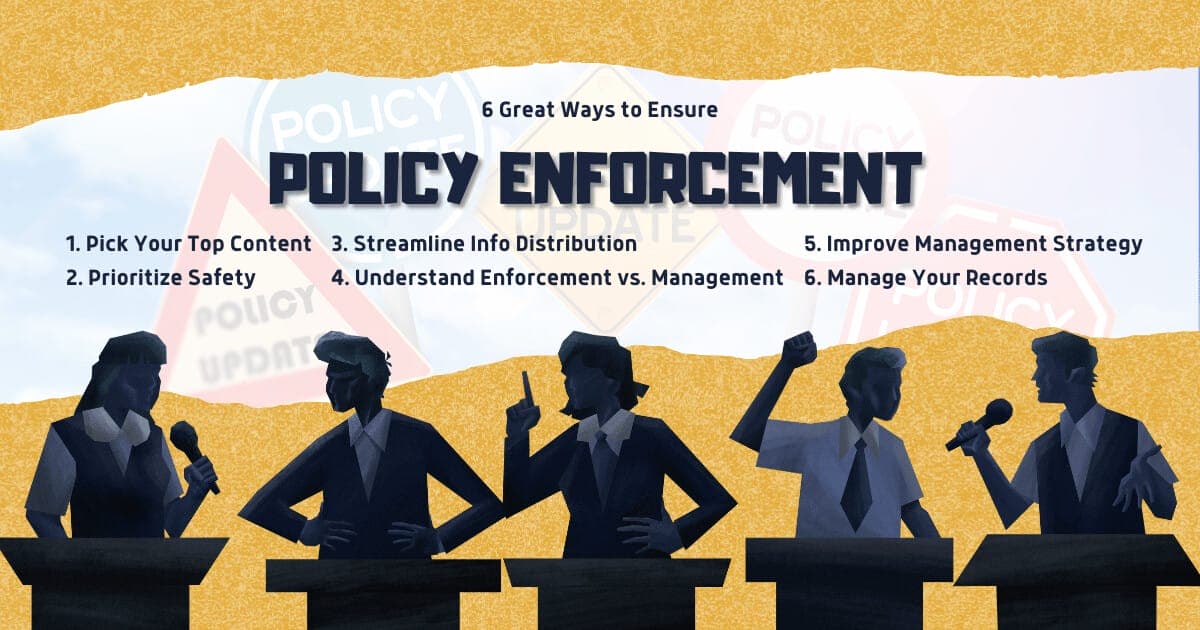
To strike a balance between urgency and long-term effectiveness:
- Pick Your Top Content: Focus on the most critical information that drivers need to know and act upon.
- Prioritize Safety: Safety should always be at the forefront of policy enforcement, ensuring that drivers understand its importance.
- Streamline Info Distribution: Make information easily accessible and digestible for drivers, perhaps through digital platforms or regular briefings.
- Understand Enforcement vs. Management: Differentiate between enforcing rules and managing drivers effectively. Enforcement is about compliance, while management is about support and development.
- Improve Management Strategy: Continuously refine your approach to managing drivers, incorporating feedback and adapting to new challenges.
- Manage Your Records: Keep meticulous records of training, compliance, and performance to track progress and identify areas for improvement.
Training Documentation
Comprehensive training documentation is essential for effective policy enforcement. This includes:
- Detailed Training Manuals: Clear and concise manuals that cover all safety protocols, company policies, and regulatory requirements.
- Regular Updates: Ensure training materials are updated regularly to reflect new laws and company policies.
- Interactive Training Sessions: Engage drivers through hands-on training and real-world scenarios.
- Feedback Mechanisms: Allow drivers to provide feedback on training sessions to continuously improve the content and delivery.
By focusing on these areas, trucking companies can ensure that their policy enforcement strategies are both effective and sustainable, fostering a culture of safety and compliance.
1. Pick Your Top Content
First, identify your priorities. The solution is not to lower the hammer on everything at once. That can be alienating to your drivers and confusing.
Consider your top priorities for policy enforcement. This is your “top content” for training. What protects your business? What would pull up the most important numbers? These are the specific areas to focus on first.
Expanded Content & Identifying Priorities
- Determine Key Areas: Start by determining the key areas that need immediate attention. This could be related to compliance, safety, or operational efficiency. By identifying these areas, you can ensure that your policy enforcement efforts are targeted and effective.
- Impact on Business: Evaluate how each area affects your business. For example, if compliance with safety regulations directly impacts your operational efficiency and reduces liability, it should be a top priority.
- Data-Driven Decisions: Use data to drive your decisions. Look at past incidents, compliance reports, and performance metrics to identify where policy enforcement can make the most significant impact.
Focusing on Top Content for Training
- Customized Training Modules: Develop training modules specifically tailored to address the top priorities. For instance, if distracted driving is a significant issue, create a module that focuses on the importance of staying attentive on the road and the consequences of violations.
- Interactive Training: Use interactive training methods such as simulations and role-playing to engage drivers and make the training more effective. This approach helps in better understanding and retention of the policies.
- Regular Updates: Ensure that the training content is regularly updated to reflect any changes in policies or regulations. This keeps the training relevant and ensures continuous compliance.
Implementing Policy Enforcement
- Clear Communication: Clearly communicate the importance of policy enforcement to all employees. This includes explaining the reasons behind the policies and how they protect both the business and the employees.
- Consistent Enforcement: Apply the policies consistently across the board. Inconsistent enforcement can lead to confusion and reduce the effectiveness of the policies.
- Monitoring and Feedback: Regularly monitor compliance and provide feedback. Use performance metrics and compliance reports to track progress and make necessary adjustments to the training and enforcement strategies.
By identifying your top priorities and focusing on targeted training for policy enforcement, you can protect your business and improve key performance metrics. This approach ensures that drivers understand and adhere to the policies, leading to a safer and more efficient operation.
2. Prioritize Safety
Include legal and safety issues, no matter what. Tickets, fines, fees, incidents, accidents, and lawsuits all come down to driver knowledge and performance on legal and safety topics.
If you don’t currently use online truck driver safety training, this could be a good time to get on board. Online training lets you release brief, continuous content to drivers that they can finish quickly, remember easily, complete more frequently, and do in their off time.
Bare minimum safety and legal issues you need to cover:
- Distracted/impaired driving
- Speed
- Maintenance and safety/road checks
- Situation-specific policies, such as driving with HAZMAT
Training Documentation and Policy Enforcement
Proper training documentation plays a crucial role in policy enforcement. Here’s how to ensure your training programs are effective and well-documented:
- Document Everything:
- Record all training sessions, including dates, times, and topics covered.
- Maintain records of driver participation and completion rates.
- Use digital platforms to store and organize documentation efficiently.
- Regular Updates:
- Ensure that all training materials are up-to-date with current laws and regulations.
- Regularly review and revise policies to reflect new safety standards or legal requirements.
- Notify drivers promptly of any changes to training content or company policies.
- Engagement and Feedback:
- Encourage active participation from drivers during training sessions.
- Provide opportunities for drivers to ask questions and give feedback.
- Use surveys and assessments to gauge understanding and identify areas needing improvement.
- Policy Enforcement:
- Implement strict policies to ensure compliance with training requirements.
- Use tracking systems to monitor driver adherence to safety protocols.
- Enforce disciplinary actions consistently for non-compliance to reinforce the importance of safety.
Benefits of Comprehensive Training
- Improved Safety: Well-trained drivers are less likely to be involved in accidents or violations.
- Legal Compliance: Keeping up with training helps ensure compliance with state and federal regulations.
- Cost Savings: Reducing incidents and fines saves money in the long run.
- Enhanced Reputation: A commitment to safety and training can improve your company’s public image.
By focusing on these aspects of training documentation and policy enforcement, you can create a safer, more compliant, and efficient working environment for your drivers.
3. Streamline Info Distribution
Remember the old phrase, “It’s not always what you say; it’s how you say it?”
When it comes to policy enforcement, how you communicate is crucial. Here are some key questions to consider:
- Are you communicating in a way that all drivers have the technology to receive?
- Are you communicating frequently and dependably, or scatter-shot?
- Are communications always relevant to the recipient?
Make it a mantra of leadership to view compliance as your responsibility. What can you do to make this easier? A reliable organizing tool that helps you streamline training, documentation, and communication with drivers can speed up compliance without causing chaos.
Tips for Effective Policy Enforcement:
- Ensure Accessibility: Make sure that all drivers have access to the necessary technology to receive important communications. This could include mobile apps, email, or other digital platforms.
- Consistency is Key: Communicate frequently and consistently to ensure that drivers are always up-to-date with the latest policies and procedures. Inconsistent communication can lead to misunderstandings and non-compliance.
- Relevance Matters: Tailor your communications to ensure they are always relevant to the recipient. Irrelevant information can be ignored, leading to gaps in policy enforcement.
Streamlining Training Documentation:
- Organized Training Modules: Use digital tools to create organized training modules that drivers can easily access and complete. This ensures that all drivers receive the same information and training.
- Documentation and Records: Keep detailed records of all training sessions, including attendance and completion rates. This helps in tracking compliance and identifying areas where additional training may be needed.
- Feedback Mechanism: Implement a feedback mechanism where drivers can ask questions and provide feedback on the training material. This helps in improving the quality of training and addressing any issues promptly.
Streamlining information distribution, while keeping top content like safety and legal issues #1, is going to maximize efficiency, cut stress, and meet more compliance goals. Effective policy enforcement requires a systematic approach to communication and training. By ensuring accessibility, consistency, and relevance in your communications, and by organizing training documentation efficiently, you can enhance compliance and create a more cohesive work environment.
4. Understand Enforcement vs. Management
Enforcement is a direct method, whether positive or negative, to spur drivers on to policy compliance. Management describes the strategies you put in place to indirectly influence compliance.
Either of these solutions can work. But they do not equally save you time, money, and frustration. The idea is, the more management you can improve, the less enforcement you’ll have to push.
Methods of enforcement (commonly used):
- Positive reinforcement (awards, acknowledgments, bonuses)
- Negative reinforcement (pulling someone from the schedule until they comply, warnings, threatening to fire)
Methods of management (not as common):
- Make training and remediation requirements easier to fulfill
- Send positive feedback to drivers regularly (individually and as a fleet) Send requests for improvement along with why and how (ex. “We’ve got a short, easy training this week to help you reduce speed violations.”)
- Improve driver-manager and driver-dispatcher communication
- Give leadership roles to drivers who excel (ex. driver mentors and driver trainers)
- Use key drivers as regular point people to learn first-hand about driver experience, complaints, and needs
- Connect CEO to drivers regularly (ex. custom content)
Training Documentation
Effective training documentation is crucial in ensuring policy enforcement and compliance. By making training materials accessible and user-friendly, companies can improve their management strategies and reduce the need for strict enforcement measures.
Key Elements of Effective Training Documentation:
- Clear Objectives: Outline the goals and expected outcomes of the training. This provides a roadmap for what the training aims to achieve.
- Step-by-Step Instructions: Break down tasks into manageable steps. This helps drivers understand each part of the process clearly.
- Visual Aids: Use diagrams, flowcharts, and videos to illustrate complex concepts. Visual aids can enhance understanding and retention of information.
- Interactive Elements: Incorporate quizzes and interactive modules to engage drivers. This helps in assessing their understanding and keeping them involved.
- Accessibility: Ensure that training materials are easily accessible to all drivers. This can be achieved by providing digital access via online safety training platforms.
- Regular Updates: Keep the training documentation up-to-date with the latest policies and procedures. Regular updates ensure that the information is relevant and accurate.
Benefits of Comprehensive Training Documentation:
- Improved Compliance: Well-documented training materials help drivers understand and adhere to company policies, leading to better compliance.
- Reduced Enforcement Needs: By providing clear and comprehensive training, the need for direct enforcement measures can be minimized.
- Enhanced Driver Performance: Proper training ensures that drivers are well-prepared to perform their duties efficiently and safely.
- Cost Savings: Effective training reduces the costs associated with accidents, violations, and non-compliance penalties.
By focusing on improving management strategies through effective training documentation, companies can create a more compliant and efficient workforce, ultimately reducing the need for stringent policy enforcement.
5. Improve Management Strategy
The lists above are just examples. What methods you actually use will depend on your particular business. But remember, trucking companies tend to rely more on policy enforcement than management strategies. The examples for enforcement are common, whereas the examples for management are not.
Just pick one or two of these management strategies to improve, and you’re already an industry leader. Investing in solutions that get to the heart of the problem, instead of spending all your attention on fixing problems—that’s what’s going to make a difference.
Let’s just take one example. If you used some of your star drivers as trainers and mentors for new drivers, and then made changes based on trainer and mentor feedback, you’re already sending a strong message:
- You care about keeping excellent drivers
- You make training a smooth, positive process
- You want drivers to have good relationships on the road
- You want to hear what’s going on with drivers
- You want drivers to be real and honest
- Drivers directly contribute to making your business better
This is the kind of place drivers want to work, and the kind of management they’re ready to cooperate with.
Expanding on this concept, here are some additional steps to enhance your management strategy:
- Create Comprehensive Training Documentation:
- Include detailed procedures, safety protocols, and company policies.
- Use multimedia tools like videos and interactive modules to make the training more engaging.
- Regularly update the documentation based on feedback from trainers and drivers.
- Implement Regular Feedback Sessions:
- Schedule monthly check-ins with drivers to gather insights.
- Use the feedback to refine training programs and improve daily operations.
- Promote a Culture of Transparency:
- Encourage open communication between management and drivers.
- Share company goals and progress to foster a sense of ownership among drivers.
- Develop a Recognition Program:
- Highlight top-performing drivers and mentors in company newsletters and meetings.
- Offer incentives like bonuses or extra vacation days to motivate staff.
By focusing on these areas, you can shift from a policy enforcement-centric approach to a more balanced strategy that incorporates effective management practices. This not only improves driver satisfaction but also enhances overall operational efficiency.
6. Manage Your Records
Managing your records effectively is crucial in policy enforcement. The urgency often associated with policy enforcement can be significantly reduced by better organization. When you have a clear understanding of who’s been trained, who still needs training, the topics that have been covered, and those that need to be addressed soon, you’re already halfway to success. This clarity allows you to focus your efforts precisely where they are needed, rather than addressing all issues indiscriminately and causing unnecessary confusion and frustration.
Key points to consider for effective policy enforcement through record management:
- Tracking Training Progress: Ensure you know which drivers have completed their training and who still needs to. This helps in applying pressure where it’s necessary, rather than creating a blanket policy that affects everyone equally.
- Identifying Training Needs: Keep a detailed record of what topics have already been covered and what needs to be covered soon. This will help in staying ahead of compliance requirements and avoiding last-minute rushes.
- Compliance Monitoring: Maintain an up-to-date record of who has complied with the training and who hasn’t. This will help in making informed decisions about where to focus your enforcement efforts.
Prioritizing excellent management not only supports your enforcement policies but also saves you time, money, and reduces turnover. It demonstrates to your drivers that you are committed to their long-term success.
INFINITI Fleet Safety Training offers a comprehensive solution that combines online training with management communication tools. This platform allows you to connect with your drivers more effectively than ever before. All training sessions are automatically documented in a secure, cloud-based server, providing you with 24/7 access to accurate records of driver compliance. This ensures that you can always prove that your drivers have received the necessary training, making policy enforcement more straightforward and effective.
Benefits of Using INFINITI Fleet Safety Training:
- Automated Documentation: All training sessions are automatically recorded, ensuring you have an accurate and up-to-date record of driver compliance.
- 24/7 Access: The cloud-based server allows you to access training records at any time, from anywhere.
- Enhanced Communication: The platform includes tools that improve communication between management and drivers, ensuring everyone is on the same page.
For more information and to see how INFINITI Fleet Safety Training can help you streamline your policy enforcement, try a free demo!.
FAQs
What is policy enforcement?
Policy enforcement refers to the methods used to ensure that employees comply with organizational policies and regulations.
Why is policy enforcement important in trucking companies?
Policy enforcement is crucial in trucking companies to maintain safety, compliance with regulations, and operational efficiency.
How can aggressive communication affect policy enforcement?
Aggressive communication can lead to short-term compliance but is not effective for building a motivated and cohesive team, which is essential for long-term policy enforcement.
What are the key priorities for effective policy enforcement?
The key priorities include focusing on critical information, prioritizing safety, streamlining info distribution, and understanding the difference between enforcement and management.
How can training documentation support policy enforcement?
Comprehensive training documentation ensures clarity, consistency, and regular updates, which are essential for effective policy enforcement.
What role does safety play in policy enforcement?
Safety is paramount in policy enforcement as it directly impacts legal compliance, driver performance, and overall operational efficiency.
How can interactive training methods improve policy enforcement?
Interactive training methods like simulations and role-playing engage drivers better, leading to improved understanding and adherence to policies.
Why is it important to regularly update training materials?
Regular updates ensure that training materials reflect the latest laws, regulations, and company policies, which is crucial for ongoing policy enforcement.
What is the difference between enforcement and management in the context of policy enforcement?
Enforcement is about ensuring compliance through direct methods, while management involves strategies to indirectly influence compliance by supporting and developing employees.
How can technology aid in policy enforcement?
Technology can streamline communication, documentation, and training, making it easier to enforce policies effectively and efficiently.
What are some common methods of policy enforcement?
Common methods include positive reinforcement (awards, bonuses) and negative reinforcement (warnings, pulling from the schedule).
How can feedback mechanisms improve policy enforcement?
Feedback mechanisms allow for continuous improvement of training content and delivery, ensuring that policy enforcement remains effective.
Why is it important to document training sessions?
Documenting training sessions provides a record of compliance, which is essential for effective policy enforcement and legal accountability.
How can improving management strategies reduce the need for policy enforcement?
Effective management strategies create a supportive environment, reducing the need for stringent enforcement measures by fostering voluntary compliance.
What benefits does comprehensive training documentation offer for policy enforcement?
Comprehensive training documentation improves compliance, reduces enforcement needs, enhances driver performance, and leads to cost savings.
How does INFINITI Fleet Safety Training support policy enforcement?
INFINITI Fleet Safety Training offers automated documentation, 24/7 access to training records, and enhanced communication tools, making policy enforcement more straightforward and effective.


