
CSA Performance for Violation Life Cycles
STOP CSA Violations From Happening
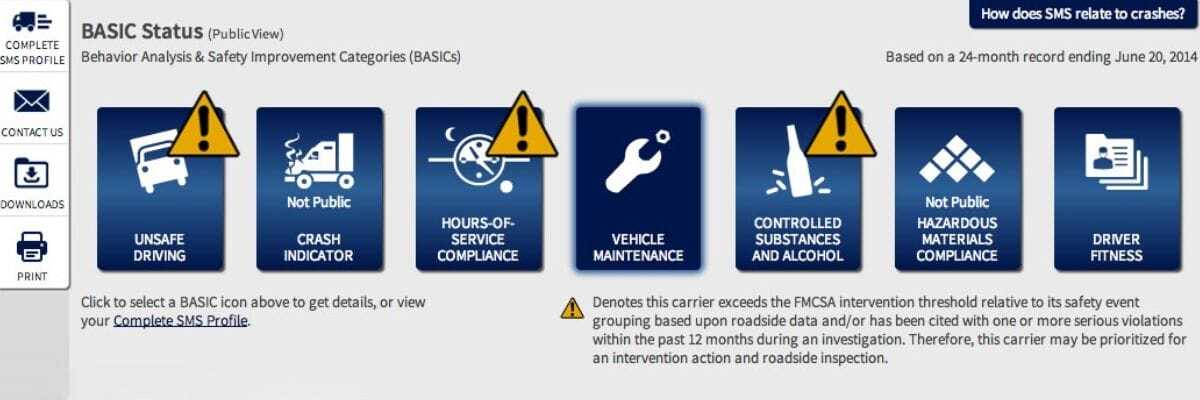
The Federal Motor Carrier Safety Administration (FMCSA) is currently in Phase 2 of implementing enhancements to its Safety Measurement System (SMS), transitioning from the original Behavior Analysis and Safety Improvement Categories (BASICs) to updated “Compliance Categories.” This phase involves reviewing public comments and incorporating recommendations that align with the agency’s safety mission into the final methodology. Significant changes include integrating Controlled Substances/Alcohol violations into the Unsafe Driving compliance category and dividing the Vehicle Maintenance category into two distinct segments:
- Vehicle Maintenance: Driver Observed: This subcategory encompasses violations that drivers can reasonably detect during routine pre-trip inspections or observed during a Walk-Around (Level 2) roadside inspection.
- Vehicle Maintenance: This subcategory includes violations typically identified by mechanics during routine maintenance or detected during a Full (Level 1) roadside inspection.
The FMCSA plans to adjust intervention thresholds to better reflect their relationship to crash rates, focusing enforcement resources on carriers with higher crash risks. The agency is also simplifying violation severity weights by adopting a straightforward approach, replacing the previous “1-10” scale with a two-value system. These modifications aim to enhance fairness, accuracy, and clarity in assessing motor carrier safety performance.

To learn more about these important FMCSA changes and how they will affect your transportation company, visit the INFINITI’s official FMCSA Prioritization Preview Summary at FMCSA Updates.
Months 1-6: Highest Impact Period
During the first six months after a violation, the impact is at its peak with a 3X multiplier. This means a violation worth 5 points would count as 15 points against your score during this period.
Months 7-12: Moderate Impact Period
In the second six-month period, the multiplier reduces to 2X. Using the same example, a 5-point violation would now count as 10 points against your score.
Months 13-24: Base Impact Period
For the final twelve months, the violation returns to its original point value. Our 5-point violation example would count as just 5 points during this period.

Strategies for CSA Violation Score Improvements

Here are key aspects of CSA Performance monitoring and improvement:
- Monitor CSA scores across all BASICs categories regularly to identify trends
- Review driver performance metrics to spot potential compliance issues early
- Assign our regular safety training focused on FMCSA Compliance categories with highest scores
- Assign corrective action training to address violations and to document training
- Use our CSA Assignment Dashboard data analytics to identify patterns in violations and target improvement efforts
Successful CSA Performance management requires:
- Consistent safety policy enforcement
- Regular driver safety training and education
- Proper vehicle maintenance documentation
- Clear communication of safety expectations and goals
- Regular review and updates of safety programs based on performance data

Get the Common Violations Checklist
Long-term Improvements
While the 24-month cycle may seem long, companies can see meaningful improvements in shorter timeframes as long as new violations are not occurring:
- Initial benefits appear at 6 months when the first multiplier reduction occurs
- Major improvement at 12 months with the second multiplier reduction
- Complete removal of the violation’s impact at 24 months
Do you think your company will see improvement maintaining the statue quo? The short answer is, NO!
By maintaining clean inspections and understanding these timelines, companies can effectively manage their CSA scores and demonstrate their commitment to safety improvement.
Here are the benefits of taking action and improving CSA score:
- Access to better insurance rates
- Increased shipper confidence and business opportunities
- Reduced likelihood of DOT audits and interventions
- Enhanced driver recruitment and retention
- Improved company reputation in the industry
- Lower risk of costly accidents and violations
- Competitive advantage in contract bidding
Safety and Profitability: A Dual Focus
The transportation industry faces unique challenges that directly impact both safety and financial performance. By implementing comprehensive safety programs, companies can address both concerns simultaneously.
Key Areas of Focus:
- Regular safety audits and inspections
- Vehicle maintenance scheduling and tracking
- Driver qualification and performance monitoring
- Hours of Service (HOS) compliance
- Accident prevention strategies
When companies invest in safety, they see multiple benefits:
- Reduced insurance premiums
- Lower maintenance costs
- Improved CSA scores
- Enhanced company reputation
- Better driver retention
By focusing on these areas, trucking companies can create a culture of safety that naturally leads to increased profitability. The initial investment in training and safety programs typically pays for itself many times over through reduced incidents and operational efficiency.
Driver Training Does NOT Have to be Like This

CSA Performance metrics are crucial indicators of a carrier’s safety compliance. By implementing targeted driver training programs, carriers can significantly improve their CSA scores across all BASICs (Behavior Analysis and Safety Improvement Categories). This proactive approach not only enhances safety but also reduces the risk of interventions from regulatory authorities.
When drivers understand how their individual behaviors directly impact CSA scores, they become more engaged in maintaining compliance. Regular training sessions focused on specific violations help create a culture of safety awareness and continuous improvement in CSA Performance.
The key is to identify patterns in violations and address them through customized training modules. This targeted approach yields better results than generic safety programs, as it directly addresses the specific areas where drivers need improvement, leading to measurable enhancements in CSA Performance metrics.
Transform Your Safety Training with INFINITI

Traditional safety training methods often fall short in today’s fast-paced transportation industry. That’s where INFINITI Workforce’s Training Management System steps in to revolutionize your approach to driver training and CSA score improvement.
Our comprehensive platform offers:
- Real-time tracking of training completion and compliance
- Customizable training modules targeting specific CSA BASIC categories
- Interactive learning experiences that increase driver engagement and retention
- Automated reporting tools to monitor progress and identify areas for improvement
- Mobile-friendly access allowing drivers to complete training anywhere, anytime
What sets our online safety training apart is its ability to:
- Reduce training administration time by up to 75%
- Deliver consistent, high-quality training across your entire fleet
- Provide immediate access to updated compliance requirements and regulations
- Generate detailed analytics to demonstrate ROI and training effectiveness
Don’t let outdated training methods hold your company back. Experience the difference modern, technology-driven safety training can make in your operations.
Ready to see it in action? Schedule a personalized demo with our training experts who understand the unique challenges of the transportation industry. We’ll show you how our training management system can be tailored to your specific needs and help you achieve your safety goals.
Contact us today to:
- Schedule a personalized demo
- Start your 30-day free trial
- Learn about our implementation process
- Discuss your specific training needs
Don’t wait for your CSA scores to become a problem. Take proactive steps to improve your safety training program with Infiniti Workforce Solutions. Your drivers, your bottom line, and your CSA scores will thank you.
Visit our online safety training or call us 972-232-7305 today to begin your journey toward better safety training and improved CSA scores.
FAQs
What is the duration of CSA violation impact on my score?
A violation impacts your CSA Performance score for 24 months, with varying severity levels during different periods. The first 6 months have a 3X multiplier, months 7-12 have a 2X multiplier, and months 13-24 maintain the base violation points.
How can I improve my company’s CSA Performance scores quickly?
While immediate improvements are challenging, you can see benefits within 6 months by preventing new violations, implementing regular safety training, maintaining proper documentation, and conducting frequent vehicle inspections.
What are the financial benefits of maintaining good CSA Performance scores?
Better CSA Performance scores lead to lower insurance rates, increased business opportunities, reduced audit likelihood, and a competitive advantage in contract bidding. This directly impacts your company’s bottom line.
How does driver training impact CSA Performance?
Regular, targeted driver training significantly improves CSA Performance by addressing specific violation patterns, increasing safety awareness, and creating a culture of compliance among drivers.
What are the most effective ways to monitor CSA Performance?
Regular monitoring of all BASIC categories, reviewing driver performance metrics, analyzing violation patterns, and implementing data analytics tools are essential for effective CSA Performance tracking.
How long does it take to see improvements in CSA Performance scores?
Companies can see initial improvements at 6 months when the first multiplier reduction occurs, major improvements at 12 months, and complete removal of violation impacts at 24 months, provided no new violations occur.
What role does vehicle maintenance play in CSA Performance?
Proper vehicle maintenance is crucial for CSA Performance, requiring regular inspections, documented maintenance schedules, and prompt repairs to prevent violations and maintain compliance.
How can small fleet owners manage CSA Performance effectively?
Small fleet owners can manage CSA Performance by implementing consistent safety policies, utilizing technology-based training solutions, maintaining detailed documentation, and regularly reviewing safety metrics.
What are the consequences of poor CSA Performance scores?
Poor CSA Performance scores can result in increased DOT scrutiny, higher insurance premiums, lost business opportunities, difficulty recruiting drivers, and potential safety interventions.
How does driver retention relate to CSA Performance?
Strong CSA Performance scores often correlate with better driver retention, as drivers prefer working for companies that prioritize safety and maintain good compliance records.
What documentation is essential for maintaining good CSA Performance?
Essential documentation includes driver qualification files, vehicle maintenance records, training completion certificates, hours of service logs, and corrective action records.
How can technology help improve CSA Performance?
Modern Learning Management Systems (LMS) like INFINITI help improve CSA Performance by providing consistent training delivery, automated tracking, and detailed analytics for identifying areas needing improvement.
What are the key areas to focus on for long-term CSA Performance improvement?
Focus on regular safety audits, vehicle maintenance, driver qualification monitoring, Hours of Service compliance, and accident prevention strategies for sustained CSA Performance improvement.
How often should companies conduct safety training for optimal CSA Performance?
Regular, ongoing training is crucial for optimal CSA Performance. Companies should conduct monthly safety meetings and provide continuous access to online training resources addressing specific compliance areas.
What makes a safety training program effective for CSA Performance?
An effective safety training program should be consistent, accessible, targeted to specific violation patterns, measurable through analytics, and engaging for drivers while addressing all BASIC categories affecting CSA Performance.


