Top 4 Reasons to Focus on School Bus Driver Safety Training This Spring and Summer

 A 2026 report by the EdWeek Research Center revealed that student misbehavior incidents have increased at least 48% since the start of the 2019 COVID pandemic. To reduce these events on buses, school bus drivers must often stop on the side of the road and perform student management at a higher-than-normal rate.
Now that spring is in full swing and summer is around the corner, school transportation safety training is more important than ever. School districts and bus companies must guarantee that drivers know how to handle a wide range of scenarios to keep themselves and their young passengers safe while traveling on America’s highways and byways. Read on to learn more about spring and summer risks and how our learning management system can improve safety for everyone…
School’s Out! School’s Out!
Long before school ends and summer vacation begins, some students and teachers start to check out mentally, as if the academic school year has already ended for them. They eagerly anticipate the event so much that they act inattentively and create high-risk situations inside and outside the classroom. Consider the following risky outdoor behaviors prompted by end-of-year and summer plans:
Students and pedestrians are often glued to their phones. They’re texting or video chatting about spring break, prom, summer vacation and other events. When they behave this way near roadways, they’re less likely to look both ways while crossing streets as they approach or leave school grounds.
People spend a lot of time thinking about upcoming joyful events. When students and teachers daydream, they don’t pay as much attention to their environment overall. As awareness decreases, they are more prone to behave in ways that threaten their safety and anyone near them, such as stepping off a sidewalk too close to traffic or ignoring a car horn or traffic signal. A bicyclist or skateboard user might swerve into traffic from a sidewalk to miss a delivery truck ramp that they didn’t see because they were too busy daydreaming.
Of course, these behaviors aren’t the only factors school bus drivers must consider. Aggression, anxiety, nervousness and other negative emotions often increase as well. Some students and teachers act out before the summer break for various reasons. They might experience end-of-year fatigue and frustration. They might feel unsteady because of sudden disruptions and scheduling inconsistency after experiencing months of calming, repetitive day-to-day norms. Constant reminders about the break can increase their negativity. Some students also act out or become inattentive because they are fearful of returning to a bad home situation.
The Summer Swing of Things
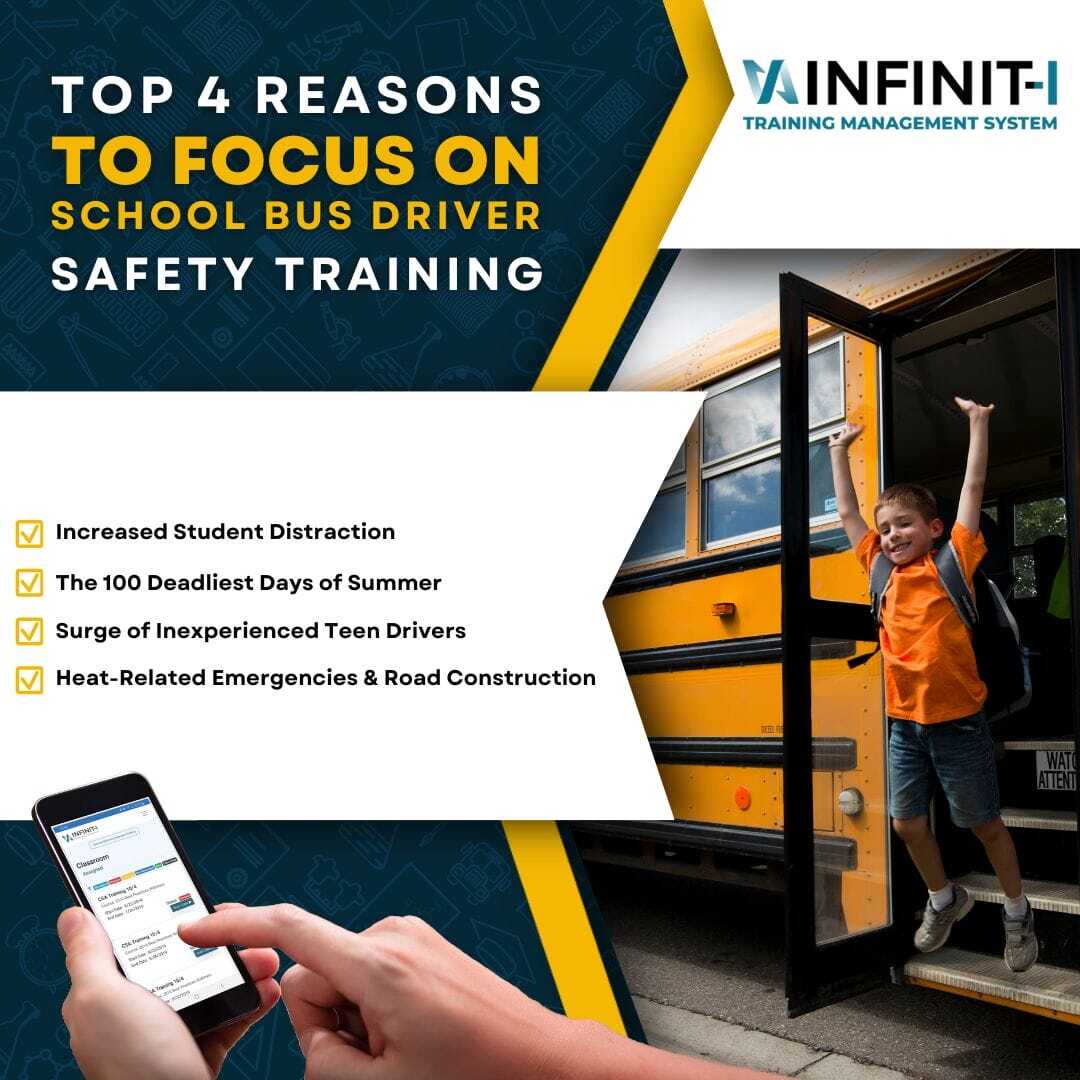
Up-to-date, comprehensive school bus driver safety training is critical to help drivers safely manage their responsibilities on the last day of school and at the beginning of summer. Memorial Day in May marks the beginning of what highway and traffic experts commonly call the 100 Deadliest Days of Summer, which lasts until Labor Day in September.
Even though some students and teachers must return during the summer months for extra schooling or meetings, the day that school ends and the week before and after are often periods of high distraction, risk-taking, and accidents. Bus drivers must maintain their awareness of parents and guardians picking up students. They must recognize and monitor the actions of elated, high-adrenaline students who might forget or ignore common traffic safety rules alone or while interacting with others in groups. They must often deal with disorderly, misbehaving and loud passengers who might leave their seats while the bus is in motion or toss items from one seat to another.
Road traffic congestion on the last day of school is another huge safety issue. In bumper-to-bumper traffic, student and teacher passenger vehicle drivers often make risky decisions or perform harmful acts with little to no warning. They might pull into another lane with barely any room to maneuver, hit their brakes within less than a car length’s distance, or stop and start with only a few inches or a foot of movement at a time. Tempers flare in this type of traffic. Some of them become so angry that they press their car horns without letting up or leave their vehicles to confront other drivers in slow traffic. School bus drivers must carefully navigate these obstacles in the safest way possible.
By revisiting or updating their knowledge via a comprehensive school bus driver safety training program, new and veteran bus drivers alike make themselves more capable of handling this single highly disruptive event with less difficulty.
Heat Waves and Summer Craze
As the spring and summer heat beats down on roadways, streets and other traffic areas, school bus drivers who continue to work during the summer months face many additional obstacles. Consider the following:
- Students who want to be anywhere else than school might act out more aggressively on their way to campus. Additionally, they might exhibit hyperactive behavior on the trip home.
- Longer daylight hours and warm weather prompt statewide road construction projects that cause less-than-optimal traffic conditions. School bus drivers might become stuck in traffic with misbehaving passengers.
- Warm and hot weather can cause emergency events, such as bee sting allergic reactions. High temps on an extremely hot day can also lead to a student or bus driver experiencing rapid dehydration. School bus drivers must remain proactive to prevent and calmly deal with emergency scenarios, especially while stuck in traffic.
- Road congestion, stop-start traffic and an increase in risky driving often happen with vacation traffic and cause accidents. People automatically think of taking a break when it’s nice out, which results in a lot more vehicles on the roads than in unfavorable weather. An increase in rushing also takes place with vacationers and business travelers trying to rapidly reach airports, bus depots and train stations or vacation destinations.
Rookie Drivers Take to the Roads
The highest number of births occurs each year in July and August. As a result, hundreds of thousands of teen drivers start to drive for the first time during those months, which increases driving risks to levels beyond any other time of the year.
The American Automobile Association (AAA) studied driver-related crash data from 2011 to 2022 gathered by the National Highway Traffic Safety Administration (NHTSA). AAA discovered that approximately 7,000 fatalities occurred during those years because of incidents involving teen drivers. Although lack of experience with driving in general and common events like nighttime visibility challenges and inclement weather influence outcomes, other factors come into play.
Hormonal, emotional and cognitive changes in teen bodies make them more prone to taking risks, lacking focus, feeling anxious, speeding and using substances while behind the wheel. In addition, teens obsess so much about their social connections that they’re more likely than adults to become distracted while driving because they’re chatting, texting and interacting on social platforms instead of focusing primarily on the road.
The AAA Foundation for Traffic Safety found that 16- and 17-year-old drivers are “three times” more likely to become involved in crashes that result in fatalities than their adult counterparts. Of all yearly teen crash fatalities, 36% occurred between 9 p.m. at night and 5 a.m. in the morning. The average for these types of crashes was 22% higher during the “100 Days” summer months. School Bus Driver Safety Training can help bus drivers improve their situational awareness when they’re needed to drive students to or from home because of evening and nighttime summer sporting and other events and away games.
 The INFINITI Advantage: How Our LMS Protects and Saves Lives
The team at INFINITI understands how these and other end-of-school-year and summer events reduce safety and adversely impact bus drivers. Our Learning Management System and School Bus Driver Safety Training program make it easy for drivers to learn about and retain everything they need to know, including:
- Proactive reduction of misbehavior and improved student management
- Calm handling of medical events, bus breakdowns and other emergencies
- Recognition of child abuse victims, bullies and even potential shooters
- Preventative measures to decrease costly accidents and other adverse incidents
- And so much more…
Our system includes a training progress dashboard and remote monitoring of driver progress. To match the needs of different types of learners, we also offer both text- and video-based content.
In addition to our School Bus Driver Safety Training program, we have an affordable Entry Level Driver Training (ELDT) program to help new bus drivers learn about and prepare for the beginning of their career. Like teen drivers, they need special basic and complex training about a wide range of topics, including licenses, the appropriate use of mirrors, vehicle inspections, dealing with crossings and danger zones, and bus security.
Use our free resources to learn more about this and other related topics. For additional information or to schedule a consultation and demonstration, call us today at (972) 232-7305 or send us a message via our convenient Contact form or our Demo form.
FAQs
What is School Bus Driver Safety Training?
School Bus Driver Safety Training is a comprehensive program that equips school bus drivers with the necessary skills and knowledge to safely transport students. It covers various topics, including avoiding tail swing and sideswipe incidents, managing student passengers, adhering to traffic laws and regulations, and emergency response.
Why is School Bus Driver Safety Training important?
School Bus Driver Safety Training is crucial in ensuring the safety of students during their commute to and from school. It helps prevent accidents, reduces unnecessary costs, and meets the moral obligation of ensuring student safety.
What are the key elements of effective School Bus Driver Safety Training?
Effective School Bus Driver Safety Training should focus on practical skills, offer regular refresher courses, and provide comprehensive knowledge of bus dimensions to help avoid tail swing and sideswipe accidents.
How does School Bus Driver Safety Training benefit school districts financially?
School Bus Driver Safety Training can significantly reduce the costs associated with minor accidents and potential litigation. This can save school districts considerable sums of money in the long run.
What role does continuous training play in School Bus Driver Safety Training?
Continuous training ensures that bus drivers are updated on the latest safety protocols and driving techniques, helping them stay alert and ready to handle any situation on the road.
How does inadequate training impact school districts?
Inadequate training can lead to an increased frequency of accidents, higher insurance premiums, and potential claims due to accidents.
How does a comprehensive School Bus Driver Safety Training program benefit school districts?
A comprehensive School Bus Driver Safety Training program can reduce the frequency of accidents, lower insurance premiums, and increase overall safety for students during their commute.
What is INFINITI Fleet Safety Training?
INFINITI Fleet Safety Training is a leader in the transportation training industry. They specialize in providing comprehensive and effective training programs specifically designed for school bus safety.
What topics does INFINITI cover in their training programs?
INFINITI’s training programs cover a wide array of topics including avoiding tail swing and side swipe accidents, safely managing student passengers, understanding and adhering to traffic laws and regulations, emergency response and first aid skills, and proper vehicle maintenance and inspection.
How does INFINITI ensure their training programs remain up-to-date and relevant?
INFINITI is continually adding new videos and resources to their training catalog to ensure that their training programs remain current and effective.
How does INFINITI’s system respond to trends in driver behavior?
INFINITI’s system has the unique ability to easily identify and respond to trends in driver behavior. If any worrying trends or issues are detected, the system allows for immediate reaction and training on the specific issue.
What resources does INFINITI provide for interested school districts?
INFINITI offers a catalog specifically for schools that provides an in-depth look at their array of training tools and resources. They also offer a demo of their system for school districts to see the benefits and effectiveness of their comprehensive school bus safety training program.
How can INFINITI’s system simplify and enhance the training process for a school district?
INFINITI’s system can help school districts improve their school bus safety training by providing comprehensive, up-to-date training resources, the ability to respond to driver behavior trends, and proof of driver accountability and training.
What are the potential costs of personal injury accidents?
The potential costs of personal injury accidents include direct costs like legal fees, settlement or judgment costs, and medical expenses, and indirect costs like increased insurance premiums, negative publicity, and damage to the district’s reputation.
What role does the school’s attorney play in personal injury accidents?
The school’s attorney plays a crucial role in understanding the potential legal ramifications and financial implications of personal injury accidents. Regular consultation with the attorney can help the district understand potential costs and take steps to mitigate risks.
How does School Bus Driver Safety Training minimize legal liability?
School Bus Driver Safety Training can reduce the risk of accidents, potentially lower insurance premiums, and minimize the risk of costly litigation. This training helps to protect students’ safety and potentially save school districts significant sums of money, thereby minimizing legal liability.